
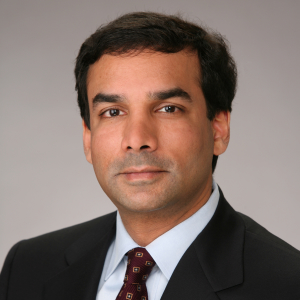
Dr. Angelo Tanna
Biography
Angelo P. Tanna, M.D. is Professor and Vice Chair of Ophthalmology and Director of the Glaucoma Service at the Northwestern University Feinberg School of Medicine in Chicago, Illinois, where he has served on the faculty since 1999. Dr. Tanna received his medical degree at the Columbia University College of Physicians and Surgeons. He completed his ophthalmology residency and glaucoma fellowship at the Wilmer Eye Institute of The Johns Hopkins University School of Medicine. Dr. Tanna has been listed in Best Doctors in America continuously since 2005. He received the American Academy of Ophthalmology Senior Achievement Award in 2017 and the Secretariat Award in 2019. He has received several teaching awards at Northwestern, including resident teacher of the year in 2019. Dr. Tanna has served in various leadership roles in the American Glaucoma Society and has also served as a member of its board of directors. He previously chaired the American Academy of Ophthalmology’s Basic and Clinical Science Course Glaucoma Committee and oversaw the major revision of the BCSC Glaucoma volume that was released in 2020. He is co-editor of the 3rd edition of Glaucoma Medical Therapy. Dr. Tanna serves on the editorial boards of four peer-reviewed journals: Ophthalmology, Survey of Ophthalmology, Scientific Reports, and Ophthalmology Glaucoma. Dr. Tanna’s research focuses on the efficacy and safety of glaucoma medications, techniques to modulate wound healing after incisional glaucoma surgery, methods to confirm the stability of the glaucoma disease process over time, abnormalities in ocular blood flow in different types of glaucoma, and the assessment of visual function in glaucoma. Dr. Tanna has been a principal investigator in several clinical trials and currently serves as a principal investigator of the NIH-funded COAST clinical trial. His work has been important in the development of new methods to accurately detect worsening of the visual field. His recent studies in collaboration with biomedical engineers center around the use of hydrogel polymers to prevent excessive fibrosis after trabeculectomy.
No publications found.