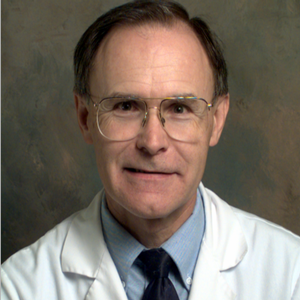
Paul Palmberg
Affiliation
Bascom Palmer Eye Institute, University of Miami Miller School of Medicine
Biography
Paul Palmberg trained at Northwestern University: MD and PhD (Biochemistry), and Washington University in St. Louis: Residency, Chief Residency, Glaucoma Fellowship. He is Professor Emeritus-Active of at the Bascom Palmer Eye Institute, University of Miami School of Medicine. He suggested in 1988 the use of setting a “target pressure” to summarize one’s initial treatment goal and a means of alerting clinicians when above target to intensify monitoring or treatment (AAO Preferred Practice Pattern for POAG). He participated in defining the relationship between intraocular pressure (IOP) and future visual field loss, suggesting the analysis that demonstrated that sufficient consistent lowering of IOP did not just slow, but halted glaucoma damage in most cases for 8 years (AJO 2000;130(4):429-440). That confirmed his report (EER 1998) of finding no average visual field loss in a large group of patients with advanced glaucoma followed for 5 years after primary trabeculectomy with 5-FU or MMC, at a mean IOP of 11 mm Hg. To mitigate the risk of using MMC in primary cases he developed techniques to avoid or treat hypotony maculopathy (AJO 1997;104:207-214), painful, failing or leaking blebs. On the DSMB of the Comparison of Initial Glaucoma Treatments Study (CIGTS) he suggested the further analysis which revealed that achieving low normal IOPs resulted in an average 10% recovery of visual field, confirming work by Ishida and Palmberg in MMC trabeculectomy that showed an average 15% recovery of visual field loss at low peak (<13 mm Hg) pressures (ARVO 2003). These contributions helped change the management of glaucoma world-wide. He is Vice-Chair of the University of Miami Human Subjects Committee. His natural history study of the early phases of diabetic retinopathy (AJO 1980), using stereophotography, was a basis for the Primary Prevention portion of the Diabetes Control and Complications Trial (NIH), and he served on its monitoring committee. The results of the DCCT demonstrated for the first time that tighter control of blood sugar greatly reduced the complications of insulin-dependent diabetes in the eyes and kidney, decisively changing the management goals of diabetes. He introduced HEPES buffer and the color indicator used in corneal transplant tissue preservation media, now used worldwide, studied trabecular cell biology, and participated in medical therapy studies. Honors: IGS World Glaucoma Prize (2000), Shaffer Glaucoma Lecture (2005), AAO Lifetime Achievement Award (2012), AGS Surgery Day Lecturer (2014), Educator Award (2014) and Annual Meeting Honoree (2023), Pan-American Association of Ophthalmology Teaching Award (2015), 3 times Professor of the Year at the Bascom Palmer Eye Institute (1999, 2013, 2023), Glaucoma Foundation Excellence and Innovation Award (2018), Zimmerman Lecture (International Congress of Glaucoma Surgeons, 2022). Dr. Palmberg has been an author of 103 journal articles and 12 book chapters, lectured in 64 countries, trained 107 clinical Fellows and 107 foreign Fellows and 268 Residents in Ophthalmology. He and wife Carol and 3 daughters have hosted many of the foreign Fellows in their home. Dr. Palmberg is a Presbyterian Elder, former runner (5 marathons-Boston 1979) and cyclist.
N/A
0
N/A
0
No articles found.